Choosing a solar road stud involves more than comparing unit prices: you must match the light, body, battery, fixing method, and load rating to the road and its authority. By the end, you will know what to ask a supplier, how installation should be planned in Pune, and which costs and records belong in the quotation.
Key takeaways
- Confirm the quotation covers surveying, layout, fixing, testing, replacement, and maintenance.
- Compare solar studs with reflective studs, road paint, raised pavement markers, and street lighting.
- Specify the stud for Pune’s traffic load, road surface, monsoon exposure, and visibility needs.
- Request a sample, technical datasheet, installation method, and night-test plan before buying.
What a Pune solar road stud supplier should actually provide
A supplier is not automatically an installer. Before ordering a solar cat eyes road stud in pune, ask whether the quotation covers a site survey, road-marking layout, sample approval, supply, fixing, night testing, replacement, and maintenance.
Identify the approving authority first: PMC, PCMC, Maharashtra PWD, NHAI, MSRDC, or another development authority. It can control:
- Permitted fixing locations
- Cones, barriers, flaggers, and lane closures
- Trial sections and inspection
- The approved spacing and drawing
A generic spacing recommendation from a solar cat eyes road for stud supplier in pune cannot replace that drawing. Overcrowded studs create glare and waste charging capacity; wide gaps weaken guidance on curves and junction approaches.
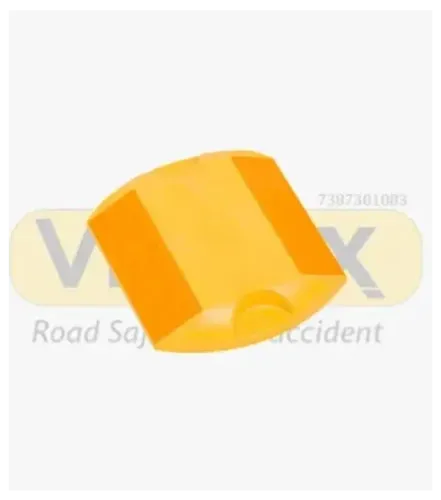
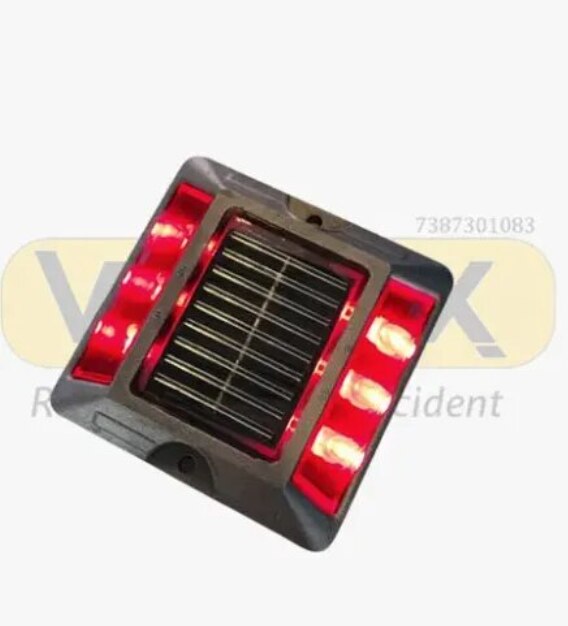
Active LED solar studs emit their own light. Passive cat’s-eye markers only retroreflect vehicle headlights. State whether you need illumination, retroreflection, or both.
| Option | Performance | Buyer’s question |
|---|---|---|
| Active LED solar stud | Emits steady or flashing light | Is LED visibility required? |
| Passive cat’s-eye marker | Reflects approaching headlights | Is headlight reflection sufficient? |
Ask the quotation to say “product only” or “complete installed system.” A complete scope should name the survey, layout, sample, installation, night test, replacement terms, and maintenance response. Also request photometric or visibility data, battery policy, warranty exclusions, spare availability, and a named local service contact.
That is the difference between delivery and an accountable installation.
Compare solar studs with the other ways to mark a road
Choose an active solar stud when you need a visible point of light at a curve, hazard, island, or junction without trenching for cables. It supplements, not replaces, longitudinal markings, stop lines, signs, chevrons, barriers, or required street lighting.
| Option | Strength | Trade-off |
|---|---|---|
| Solar LED stud | Independent light output and controlled steady or flashing mode | Needs charging, battery replacement, cleaning, and correct spacing |
| Passive reflective cat eye | No battery, wiring, or charging | Depends on vehicle headlights and gives no active light |
| Wired warning light | Reliable controlled power and high operating control | Requires cabling, power protection, electrical maintenance, and fault tracing |
| Rumble-effect stud | Adds tyre vibration and audible warning | Does not provide the same light output as an LED |
| Thermoplastic or painted marking | Covers long continuous lines with low device complexity | Wears under traffic and loses visibility when dirty or wet |
Match the device to the function: use delineation for edge lines and curves, advance hazard emphasis for speed humps and junctions, and conspicuity at traffic islands. Parking areas, warehouse driveways, gated campuses, and pedestrian crossings need a design that avoids glare and trip hazards.
Specify LED colour, light output, visibility distance, steady or flashing mode, and spacing from the approved drawing. A solar cat eyes road stud supplier in Pune should not substitute generic spacing for that design; dense placement can glare, while wide gaps break guidance.
Specify the stud for Pune’s road, traffic, and weather conditions
Choose the model by documented solar exposure and mechanical loading, not by “heavy duty” wording. Require the datasheet to name:
- LED colour, light output, visibility distance, and flashing or steady mode
- Charging time and operating time after a cloudy day
- Solar-panel type, battery chemistry, and battery-replacement method
- Housing and lens materials, dimensions, load rating, operating-temperature range, and ingress-protection rating
Ask whether the unit is rated for cars, buses, trucks, turning movements, and heavy axle loads. Static compression alone does not cover tyre impact or shear caused by braking and turning.
Mounting choice changes the failure risk.
| Option | Check before approval | Main risk |
|---|---|---|
| Surface-mounted | Adhesive, anchors or epoxy, bond strength, and projecting-edge limit | Tyre impact, ploughing, or trip hazard |
| Recessed | Allowable installation depth, drainage, resin, and panel alignment | Weak pavement or water entering the recess |
| Either type | Load test covering impact and shear, not compression alone | Failure under turning traffic |
For a solar road stud supplier near Pune, require a site survey recording tree shade, compound walls, parked vehicles, dust, road grime, standing water, and panel orientation toward usable sunlight. Monsoon work also needs a stated pavement-moisture limit, drainage check, surface-preparation method, and adhesive cure condition.
Reject “three days’ autonomy” unless the supplier states the flash pattern, light-hours, solar exposure, and temperature used for that claim.
How solar cat eye installation should be carried out in Pune
1. Approve the site and drawing before work starts. Inspect pavement strength, repairs, texture, drainage, standing water, and monsoon exposure, then confirm the authority-approved drawing, spacing, orientation, and fixing points.
2. Mark every stud location on the pavement from that drawing. Do not substitute a supplier’s generic spacing recommendation, since dense placement can cause glare and sparse placement can break guidance on curves or junction approaches.
3. Submit the traffic-control plan before closing the lane. Arrange cones, barriers, flaggers, lane closures, or night traffic control, and define how vehicles and pedestrians will be diverted.
4. Mechanically clean and dry each fixing area. Remove dust, oil, mud, loose aggregate, weak material, and failed repair material; record the permitted pavement moisture and temperature for the specified adhesive or resin.
5. Drill or recess only to the approved depth. Mix and place the specified adhesive, align every panel with the traffic path, fix the stud without trapping water, and record the product batch, adhesive batch, date, weather, and installer.
6. Keep traffic off the area for the adhesive manufacturer’s stated cure time. Vertex Road Safety Products can provide a method statement, local traffic-control plan, and site-specific performance check instead of relying on catalogue claims.
7. After curing, verify bond, alignment, surface projection, charging, and drainage. Conduct a night test for colour, flash or steady mode, visibility distance, glare, and missing units before reopening the road.
Solar cat eye installation in Pune is incomplete until monsoon conditions, safe traffic reopening, and a post-cure inspection are documented.
Related product
 | Solar Cat Eyes Road Stud Solar Cat Eyes Road Studs are designed to enhance road safety and visibility, especially during night-time and low-light conditions. View product → |
What to request before you buy solar road studs in Pune
Before you buy solar road studs in Pune, compare quotations by evidence, not by unit price. Request a datasheet showing LED and battery specifications, charging and autonomy test conditions, ingress-protection rating, load-test evidence, body and lens materials, operating-temperature range, product model, batch details, warranty exclusions, battery-replacement procedure, spare-part availability, and photographs of completed installations.
| Quote item | Require separately | Why it matters |
|---|---|---|
| Stud | Model, batch, specifications, quantity | Prevents substitution |
| Installation | Drilling or recessing, preparation, adhesive or resin, cure time | Exposes the real fixing cost |
| Site operations | Pavement repair, traffic diversion, night work, transport, testing, taxes, maintenance | Prevents omitted project costs |
Ask for the installation method statement, traffic-management allowance, and a named service response time. Require the adhesive or resin data to state pavement-moisture limits, temperature limits, surface preparation, and traffic exclusion during curing.
- Request a sample or trial section, then confirm whether PMC, PCMC, Maharashtra PWD, NHAI, MSRDC, or another authority must inspect or approve it.
- At handover, obtain the as-built location plan, installation date, batch records, charging instructions, warranty terms, replacement procedure, adhesive data, and before-and-after photographs.
Keep these records with the maintenance file. They help identify whether a failed stud resulted from a component defect, impact damage, vandalism, shading, or bond failure.
Frequently asked questions
What should a solar road stud supplier in Pune include?
The quotation should identify the site survey, road-marking layout, sample approval, supply, fixing, night testing, replacement, and maintenance.
How do solar road studs compare with other road-marking options?
Compare them with reflective studs, painted markings, raised pavement markers, and street lighting for visibility, installation effort, maintenance, and operating conditions.
How should you specify solar studs for Pune conditions?
Match the stud to the road surface, vehicle and traffic loads, monsoon exposure, required visibility, placement, and maintenance access.
What should you check before buying solar road studs in Pune?
Request a sample, technical specifications, installation procedure, warranty terms, testing plan, replacement process, and maintenance scope.
Keywords