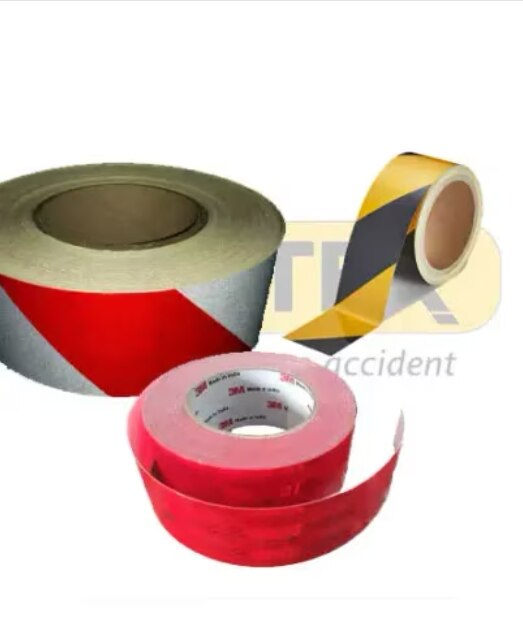
The best choice depends on whether you are marking a temporary hazard or upgrading a traffic-control barricade. By comparing the reflective construction, colour pattern, night performance, fixing method and monsoon durability, you can specify tape that remains visible instead of choosing by a bright showroom sample.
Key takeaways
- Use a stable barricade with adequate width, lamps and advance warning signs.
- Choose red-and-white tape to mark vehicle hazards and restricted work areas.
- Test visibility from a moving vehicle at dusk, not only under a flashlight.
- Compare suppliers through site trials, fixing performance and replacement cost.
Start with the barricade’s job, not the tape roll
A barricade must control a driver’s path, not merely display tape. A roll of barricade tape for construction sites stretched between posts is a visual warning strip; it can sag, twist, collect dirt and present too little reflective area. A traffic-control barricade also needs adequate width, stability, retroreflective coverage, lamps and advance warning signs.
For barricade reflective tape for worksites in Pune, use outdoor-rated laminated or film-based retroreflective sheeting fixed to a rigid barricade at vehicle approaches.
| Construction | Strength | Best use |
|---|---|---|
| Polyethylene or PVC film | Consistent optical surface; easy to clean | Rigid barricades and repeated vehicle exposure |
| Woven tape | Flexible, but can sag and twist | Short-duration marking between posts |
| Laminated tape | Protects the printed or reflective layer during handling | Relocated barricades and rough site work |
Choose microprismatic sheeting when drivers need to detect the barricade at longer distances or during night approaches. Enclosed-lens glass-bead tape costs less and suits shorter viewing distances, but delivers lower night performance.
Use the tape as supplementary delineation unless the road-owning authority or project specification accepts it as the primary device. A rigid barricade with the specified pattern, lamps and advance warning signs remains necessary, especially during power cuts or rain. A loose reflective strip cannot define a safe pedestrian route or replace physical separation.
Choose the colour pattern for the hazard you are marking
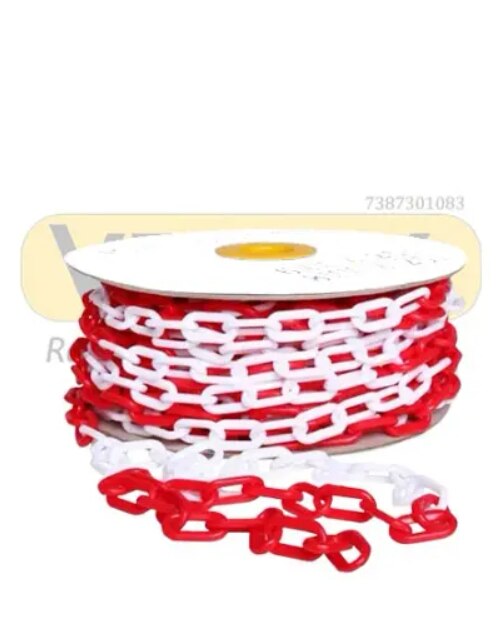
Use the colour code assigned by the road authority or site owner, not the colour that looks brightest on a roll. Red-white barricade tape in Pune commonly signals a prohibited, restricted or exclusion area, but it does not define a pedestrian route or replace a sign.
Use these decisions as a starting point, then match the project specification:
| Use case | Colour and pattern | Practical requirement |
|---|---|---|
| Construction sites | Approved pair on alternating stripes | Prefer a rigid barricade; treat loose tape as supplementary |
| Road diversions | Road-owning authority’s specified pattern | Do not substitute red-white without written approval |
| Parking areas | Site-documented colour code | Use signs and arrows to define vehicle and pedestrian movement |
| Factories | Documented internal code; yellow-black where assigned to physical hazards | Apply the same code consistently across departments |
| Night work | The approved daytime pattern with retroreflective material | Add lamps, separation and advance warning signs |
Barricade tape for construction sites must specify the colour pair, stripe width, stripe angle and background separately from reflectivity. The U.S. MUTCD uses alternating orange-and-white barricade stripes; that pattern is not automatically the Indian requirement for a Pune diversion.
A red reflective film alone is not red-white hazard marking. It lacks the contrasting white field and specified stripe layout, so drivers may not recognise the intended boundary. Confirm the pattern before ordering, especially where red-white barricade tape in Pune is being used near live traffic.
Test the reflective performance from a moving vehicle
Run a nighttime drive-through at the intended approach speed and distance. View the barricade from the real vehicle angle, first in dry conditions and then after wetting the tape; a sample that looks bright under a phone flash at arm’s length can fail behind windshield glare.
| Type | What you see at night | What it needs |
|---|---|---|
| Retroreflective tape | Sends headlight energy back toward the driver | Headlights aimed at the tape |
| Fluorescent tape | Strong colour contrast in daylight | Daylight or another ultraviolet-rich source |
| Bright-coloured tape | Visible colour without a guaranteed night return | Ambient light or direct illumination |
Ask the supplier for a measured coefficient of retroreflection at stated observation and entrance angles. ASTM D4956 is a recognised reference for retroreflective sheeting types and test methods; “bright” and “high visibility” are not measurements.
| Construction | Optical performance | Trade-off |
|---|---|---|
| Microprismatic sheeting | Higher output, especially over longer viewing distances | Higher cost; more vulnerable to contamination, cutting and installation damage |
| Basic glass-bead tape | Lower-cost retroreflection for shorter viewing distances | Lower output and greater performance loss at distance or oblique angles |
Inspect from pedestrian and side angles after the drive-through. Headlights do not illuminate every approach, so reflective barricade tape benefits under headlights, street lighting and power cuts do not remove the need for steady or flashing lamps, physical separation and advance warning signs.
Match the tape to its fixing method and Pune’s weather
Specify tape width from the visible area required on the barricade and the gap between fixing points. Choose roll length from the number of barricades being moved, allowing for overlaps, replacement sections and waste; a short roll creates joints that lift during relocation.
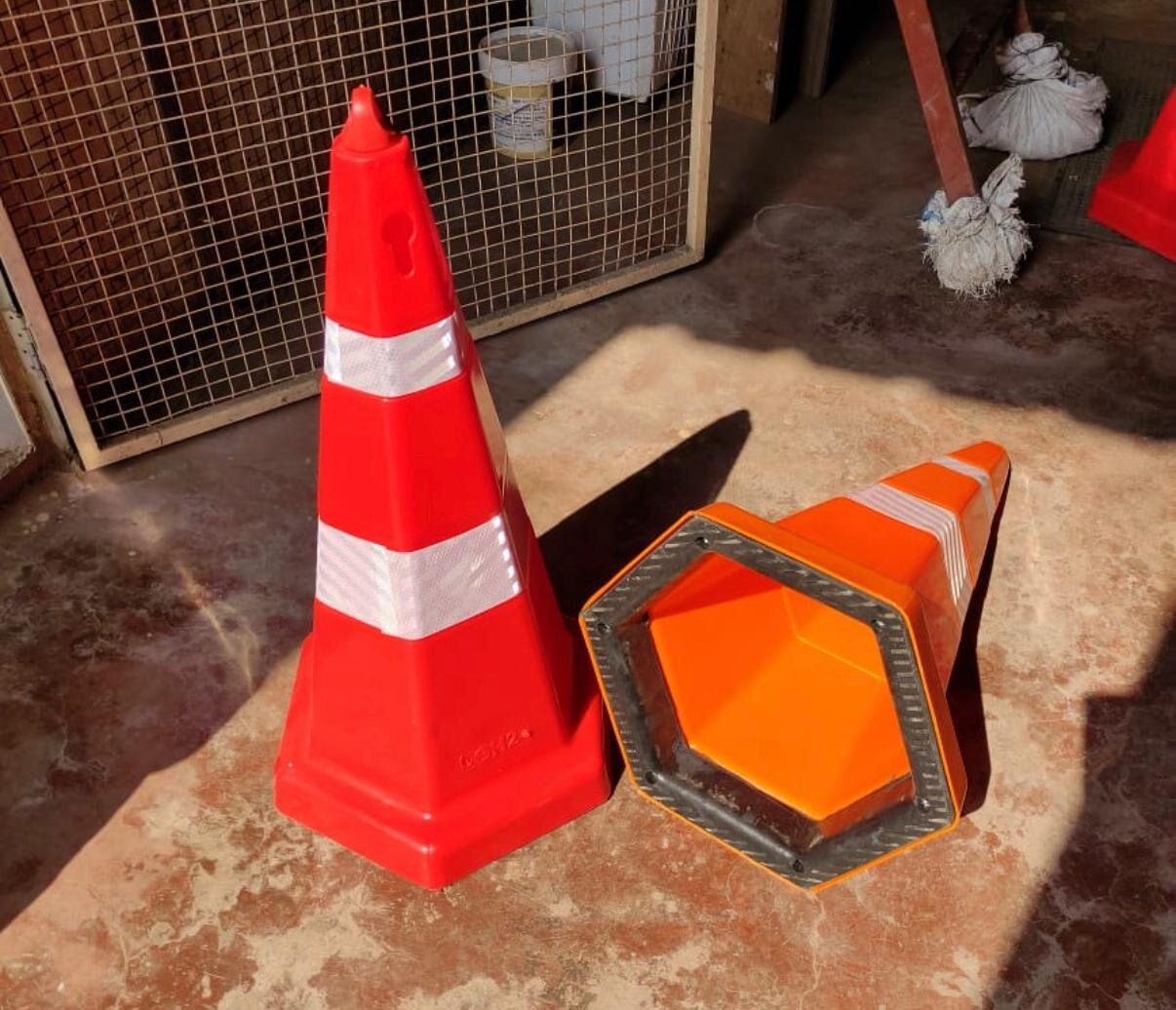
For cones, drums, poles, temporary gates and mesh, use non-adhesive tape with mechanical fixing where practical.
Use adhesive-backed film only on clean, smooth, rigid surfaces after an adhesion trial on the actual material. Adhesive that holds on painted steel can fail on polyethylene barricades, powder-coated surfaces, rough timber, dusty concrete and other low-surface-energy plastics because the adhesive cannot wet or grip the surface consistently.
- Require a stated backing or substrate, adhesive type, tape width, roll length and outdoor-weathering data.
- Prepare surfaces that are clean, dry and oil-free, with no loose paint, release agent or cement dust.
- Reject installation with stretching, bubbles or wrinkles; seal sharp cuts so water cannot enter the reflective layer.
- Check resistance to Pune’s monsoon wetting, UV exposure, mud, cement dust, abrasion, repeated relocation and temperature changes.
- Inspect retained reflectivity after cleaning and wet exposure, not only from a dry showroom sample.
These checks matter whether you are buying barricade reflective tape for worksites in Pune or barricade tape for construction sites. A short trial exposes edge lift and early peeling before a full batch fails.
Compare suppliers by a site trial and total replacement cost
Choose a reflective safety tape supplier in Pune by total replacement cost, not roll price. Count tape, cleaning, reapplication labour, failed visibility and replacement frequency over a work season.
| Option | Optical construction | Best fit |
|---|---|---|
| Microprismatic film | High retroreflection; consistent surface | Rigid barricades facing repeated vehicle traffic |
| Glass-bead film | Lower-cost, shorter viewing performance | Controlled approaches and short-term work |
| Woven or laminated tape | Flexible; can sag, twist or abrade | Supplementary marking with frequent movement |
Request a sample in the exact polyethylene, PVC, painted steel, powder-coated metal, timber, cone, drum or gate material. Run a short night drive-through at the intended speed and distance after dusting and wetting it, then record:
- Substrate and optical technology; coefficient of retroreflection at stated observation and entrance angles
- Colour pair, stripe width, stripe angle and background, separately from reflectivity
- Tape width, roll length and adhesive compatibility with the receiving surface
- Monsoon, UV, mud, cement-dust and abrasion evidence, including retained reflectivity after cleaning
- Batch number, manufacture date, installation instructions and surface preparation requirements
- Edge lift, peeling, colour change, abrasion and visibility from driver, pedestrian and side angles
Compare the cost of each failed sample over the expected relocation cycle. Vertex Road Safety Products can help match tape to the physical traffic-control setup and test the receiving surface, but tape never replaces a compliant barricade, lamps or warning signs.
Use microprismatic, outdoor-rated film on rigid barricades for repeated vehicle exposure, and reserve flexible woven or lower-grade rolls for clearly controlled, short-duration supplementary marking.
Related product
 | Barricade & Reflective Tape Manufacturer of a wide range of Road Safety Products. View product → |
Frequently asked questions
What should a barricade do before you choose reflective tape?
It must control a driver’s path and provide a stable, visible barrier with adequate width, lamps and advance warning signs.
Which colour pattern suits a vehicle hazard at a Pune worksite?
Red-and-white barricade tape clearly marks restricted areas and vehicle hazards, but the pattern must remain visible after installation.
How should you test reflective barricade tape?
View it from a moving vehicle at dusk and check whether the reflective surface remains visible when the tape is flat, clean and correctly fixed.
How do Pune weather conditions affect tape selection?
Choose tape and fixings that resist rain, dust, heat and repeated handling, then compare replacement costs through a site trial.
Keywords