“Fresher light” is not a standard product name, so a Pune road-safety enquiry can return a solar flasher, warning beacon or illuminated road stud when you need only one of them. By defining the device, checking its optics and power system, and testing its site performance, you can compare quotations without mistaking a flashing lamp for a complete traffic-control solution.
Key takeaways
- Treat “fresher light” as a solar flasher, beacon or illuminated road stud.
- Compare flash pattern, LED visibility, battery capacity and solar charging performance.
- Ask for ingress protection details, mounting instructions and monsoon maintenance requirements.
- Choose a supplier that specifies installation location, testing steps and service support.
What does “fresher light” mean on a Pune road?
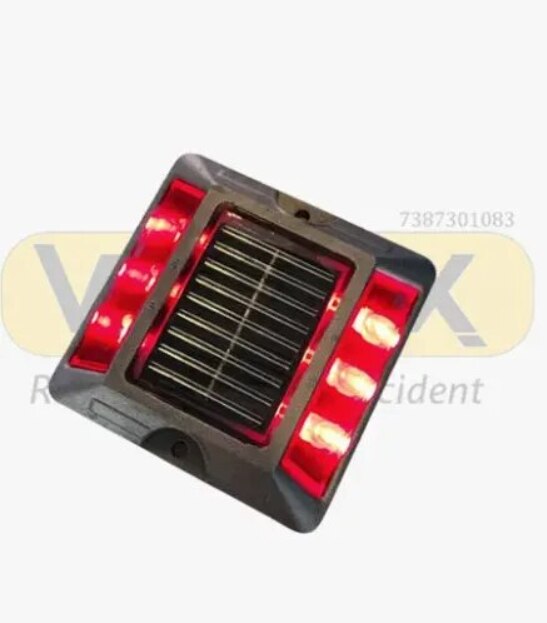
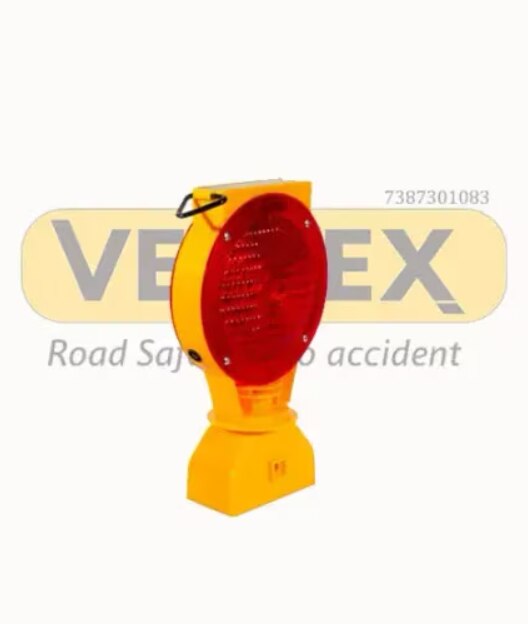
“Fresher light” is not a defined road-safety product category. A search for a red solar fresher light in pune usually means a solar flasher or blinker, solar warning beacon, or illuminated solar road stud.
| Option | What it does | Where it fits |
|---|---|---|
| Barricade lamp or LED beacon | Gives an elevated, active warning signal | Work-zone barricade, gate, ramp or obstruction |
| Illuminated solar road stud | Provides pavement-level delineation; flashes or stays steady | Lane edge, island, median end or road stud |
| Reflective sign or retroreflective marking | Communicates direction, restriction or lane geometry and reflects headlights | Signs, chevrons, lane lines and edge lines |
A flasher draws attention to a hazard; it does not replace an authorised traffic signal, stop control, mandatory sign, lane marking or object marker. A battery-depleted flasher loses that active warning, while a reflective sign, road-stud reflector or retroreflective marking can remain visible in vehicle headlights.
For a solar road safety light in pune, name the application before requesting a quotation: work-zone barricade, median end, bridge approach, crash barrier, traffic island, gate, ramp or road stud. That choice determines the mounting bracket, beam direction, viewing distance, vandal and impact protection, and enclosure.
A supplier cannot select the correct optics or protection from “red light” alone.
Which light and flash specifications affect visibility?
Demand more than a red lens: specify the light source, colour output, intensity and optics. For a red traffic safety light in Pune, request the LED type, red wavelength or chromaticity specification, daytime and nighttime luminous intensity, effective luminous intensity, beam or viewing angle, and stated visibility distance.
Your purchase specification should also state:
- Flash pattern and frequency in flashes per minute or hertz
- LED duty cycle and whether the unit provides continuous illumination, intermittent flashing or selectable patterns
- Dusk-to-dawn automatic switching through a daylight sensor
- On/off control, flash-pattern control and low-voltage cut-off behaviour
Optics determine who sees the warning:
| Option | What it does | Suitable approach |
|---|---|---|
| Narrow forward beam | Concentrates light along one direction | Drivers approaching a barricade face-on |
| Wide viewing optic | Spreads light across several angles | Median ends, islands, barriers and multi-direction approaches |
Red alone does not guarantee daytime conspicuity. A low-mounted lamp can blend with vehicle tail lamps and urban lighting, while a narrow beam disappears when a driver approaches from the side.
Check visibility from the actual approach distance, at the intended mounting height, in daylight and darkness. Test the selected flash pattern with the panel and lens clean; dirt, glare and background lighting can turn a catalogue specification into a poor field warning.
Can the solar system survive Pune’s monsoon?
A solar road safety light in Pune can keep working through the monsoon only if its autonomy reflects cloudy charging, not an annual sunshine average. A dirty panel, repeated wetting or a damp connector can stop the system even when the LED module remains healthy.
Ask for these details in writing:
- Solar-panel dimensions and rated wattage; battery chemistry, nominal voltage, ampere-hour or watt-hour capacity; charging time; full-charge operating hours; flash rate and duty cycle used for the autonomy claim; and low-charge behaviour.
- A quotation statement confirming whether autonomy assumes uninterrupted panel exposure and a fully charged battery. Treat “multi-day backup” as incomplete without those assumptions.
- A site check covering shade from trees, buildings, gantries, dust and the mounting structure. Test worst-season charging during Pune’s monsoon rather than relying on an annual sunshine claim.
- The exact IEC 60529 enclosure rating. IP65 means dust-tight and protected against water jets; IP66 adds powerful water jets; IP67 concerns temporary immersion. IP67 alone does not prove water-jet resistance.
- Operating-temperature range, ultraviolet resistance, impact rating or test evidence, panel-to-body joint protection, cable-gland construction, connector sealing and expected service life.
Inspect the panel and connectors after deliberate wetting and reduced-charge operation. Confirm dusk activation, overnight illumination, flash rate and low-voltage behaviour; an immediate flash after installation proves almost nothing.
Where should you mount a red warning light on Pune roads?
Mount it where drivers need a warning, but outside the swept path of vehicles and construction equipment. The correct location depends on whether the light marks a temporary hazard, a fixed obstruction, an approaching hazard or a controlled access point.
| Location | Suitable use | Mounting focus |
|---|---|---|
| Barricade or work zone | Temporary hazard warning | Elevated, visible, protected from equipment |
| Median end, traffic island or crash barrier | Obstruction delineation | Recessed, guarded or breakaway mounting |
| Sharp bend or bridge approach | Advance hazard emphasis | Face approaching traffic without hiding signs |
| Gate, parking ramp, queue point or access road | Controlled movement | Position for site users, not as public signal control |
A red traffic safety light in Pune must not be presented as an authorised traffic signal, stop control or mandatory sign. Keep it distinct from signal heads, and preserve required signs, lane lines, chevrons, object markers and edge markings. A flasher draws attention; it does not replace compliant markings or signs.
Before approving a red solar fresher light in Pune, check:
- Overall dimensions and weight
- Wall, pole or barrier compatibility
- Mounting-hole spacing and bracket projection
- Clearance from truck, bus and construction-equipment swept paths
- Inclusion of a bracket, pole clamp, breakaway mount, tamper-resistant fasteners, cable and gland
- Whether drilling is required and which tools the installer needs
A recessed or guarded mount is safer than a rigid projecting bracket inside an impact path. On medians and barriers, specify theft resistance, accessible fault diagnosis and a documented battery-replacement method.
How should you compare a red solar light supplier in Pune?
Compare quotations against the site specification, not the product name. A red solar fresher light supplier in Pune should provide one complete bill of materials for the quoted assembly: LED module, solar panel, battery, charge controller, daylight sensor, enclosure, bracket, fasteners, cables and connectors.
A “solar road safety light in Pune” that excludes the controller or mounting hardware is not a complete system.
| Quotation item | What to compare | Confirm before purchase |
|---|---|---|
| Replaceable parts | Battery, LED module, sensor and controller | Battery-replacement procedure and expected replacement interval |
| Warranty | Separate coverage for panel, battery, electronics and enclosure | Warranty boundary, exclusions and service response time |
| Installation | Bracket, fasteners, cable glands and protected cable route | Included labour, tools and tamper resistance |
| Performance | Autonomy, flash rate, charging assumptions and low-charge behaviour | Rated flash rate, full-night operation and worst-season assumptions |
Vertex Road Safety Products can be considered when you need supply and installation of road-safety or traffic-management equipment, but compare its proposal using the same specification and acceptance checks.
- Confirm daytime charging and automatic dusk activation.
- Verify the flash rate with a timed count, not by appearance.
- Check full-night illumination and low-charge or reduced-charge behaviour.
- Inspect operation after deliberate panel shading or a reduced-charge period.
- Check mounting security, cable protection and connector sealing.
Record what remains useful after battery depletion or panel fouling: reflective signs, retroreflective markings and passive reflectors continue working; an active flasher does not.
Related product
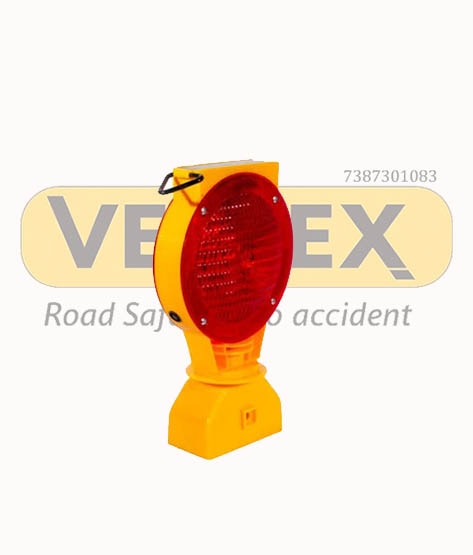 | Red Solar Fresher Light The Red Solar Fresher Light is designed for reliable performance in traffic control and safety applications. View product → |
Frequently asked questions
What does “fresher light” mean on a Pune road?
“Fresher light” is not a defined road-safety product category. It usually refers to a solar flasher or blinker, solar warning beacon, or illuminated solar road stud.
Which light and flash specifications affect visibility?
Compare the red LED intensity, viewing angle, flash pattern, flash rate, operating hours and battery capacity. Check whether drivers can see the light from the approach distance and in rain or glare.
Can a solar system survive Pune’s monsoon?
Check the enclosure’s IP rating, seal and cable entry, battery protection, drainage, panel mounting and cleaning access. Confirm how the supplier tests operation after prolonged rain and overcast charging conditions.
Where should you mount a red warning light on Pune roads?
Mount it where approaching drivers receive an unobstructed warning without confusing it with a traffic signal. Select the position, height, spacing and orientation after reviewing road geometry, speed, sight distance and nearby signs.
How should you compare a red solar light supplier in Pune?
Compare written specifications, warranty terms, installation scope, replacement parts, testing records, response times and experience with the exact road environment. Ask for a site assessment rather than comparing lamp price alone.
Keywords