Cars overrunning bays, touching walls, blocking walkways and striking columns usually point to a layout problem, not simply a missing parking accessory. By the end, you will know how to measure each bay, decide whether a rubber stopper is suitable, specify the fixing method and inspect the result without creating new drainage, access or safety problems.
Key takeaways
- Use stoppers to prevent bay overruns, wall contact and front-end projection.
- Set the stopper from the vehicle’s tyre path, wall clearance and bay geometry.
- Measure tyre size, vehicle mix, bay depth, surface and drainage before selection.
- Approve installation with layout drawings, anchors, visibility checks and inspection records.
Which Pune parking problems can a rubber car stopper actually solve?
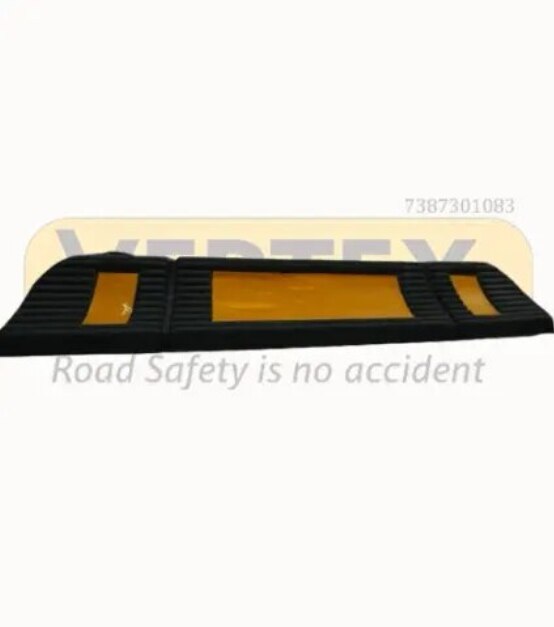
A rubber car stopper in Pune solves forward-positioning failures: it gives a tyre a physical stopping point so a car is less likely to overrun a bay, touch a wall or column, or project its front over a marked edge.
Correct placement can keep vehicle overhang out of a walkway, but it does not solve every parking vehicle movement problem.
It does not control speeding before contact, lateral drift, reversing collisions, or a car crossing a pedestrian route. It is not perimeter impact protection; vehicles that mount it at speed, or forklifts and trucks that regularly cross it, need an engineered control.
A stopper must also preserve accessible-space and access-aisle clearance, without creating a trip edge or forcing wheelchair users behind parked vehicles.
| Problem | Suitable control | What the control actually does |
|---|---|---|
| Forward overrun in a marked bay | Rubber wheel stopper | Stops the tyre at a defined position |
| Speeding in an aisle or approach | Speed breaker or rumble strip | Makes drivers slow before reaching parked vehicles |
| Side-impact at a column or wall | Bollard, column guard or barrier | Protects the structure from angled contact |
| Pedestrian-route crossing | Kerb, bollard, barrier, lighting and markings | Separates people from vehicle paths |
| Perimeter or drop-edge impact | Guardrail or rated vehicle barrier | Resists a defined impact; a stopper does not |
For recurring parking vehicle movement problems, combine the stopper with arrows, lane markings, mirrors and lighting. Treat it as a parking-positioning device, not traffic calming or a substitute for a tested restraint system.
How do you position a stopper so the car stops in the right place?
Set the stopper from the wall, kerb, column, dock edge or pedestrian route by calculating the required clearance at the tyre contact point, not by copying one setback across every bay.
A vehicle’s wheelbase, front overhang, bumper height and bay depth determine where its nose will finish after the tyre reaches a rubber car stopper for parking.
Mark the bay before drilling:
- Park the largest vehicle expected in that space and mark each tyre’s contact point.
- Measure from that mark to the wall, column, kerb, shutter, dock edge and nearest pedestrian route.
- Check that the front overhang stays clear of the obstacle and does not project into a walkway.
- Repeat the check with the smallest vehicle; excessive setback can leave the bay underused.
- Test door-opening space, turning clearance and the vehicle’s approach angle.
- Check floor slope and drainage so the stopper does not divert water into an anchor or block a drain.
Use the trial position only after checking the full bay depth and aisle. A stopper placed too close to a kerb can transfer repeated impact into the kerb; one placed too far forward can leave the car touching a column or blocking pedestrians.
Keep accessible parking spaces and access aisles fully usable, and never put the stopper in the required walking path. Mark the final anchor points after the largest vehicle clears every protected edge.
What should you measure before choosing a rubber wheel stopper for businesses?
Measure a marked trial bay before choosing a rubber wheel stopper for businesses. Park the largest expected vehicle and record where its tyre contacts the stopper, where its front overhang ends, and whether doors open without entering a wall, column or pedestrian route. This exposes parking vehicle movement problems before anyone drills the floor.
Record these measurements in the trial bay:
- Vehicle classes: hatchbacks, SUVs, vans, delivery vehicles and two-wheelers
- Tyre position, wheelbase, bay depth and turning radius
- Wall, column, shutter, kerb and railing clearance
- Door-opening space and the full pedestrian path
- Floor slope, drainage channels, standing-water points and expansion joints
- Aisle width, reversing path and sight lines
- Accessible-space width, access-aisle width and route continuity; verify Pune requirements separately rather than copying the 60-inch car or 96-inch van aisles in the 2010 ADA Standards
Compare the measured problem with the control that actually addresses it:
| Option | What it controls | Choose it when |
|---|---|---|
| Rubber wheel stopper | Forward tyre travel | You need accurate bay positioning |
| Speed breaker | Vehicle speed | Cars approach too fast |
| Rumble strip | Driver alerting and speed reduction | You need repeated visual and tactile warning |
| Kerb | Edge definition and drainage separation | You need a raised boundary |
| Bollard | Direct vehicle impact | Cars threaten pedestrians, doors or equipment |
| Column guard | Side-impact damage | Columns sit beside turning paths |
| Dock bumper | Repeated loading-bay contact | Trucks need protected dock clearance |
A stopper cannot replace a bollard, column guard or traffic-calming treatment when the trial shows those hazards.
How should car stopper installation in Pune be specified and approved?
For car stopper installation in Pune, approve the marked trial bay before drilling. Check the largest vehicle, wall and column offsets, door clearance, turning path, pedestrian route, drainage, waterproofing and floor condition.
- Inspect concrete for cracks, delamination, reinforcement, expansion joints and seepage. Do not anchor across a joint, over a drain, into a weak topping or through waterproofing without a repair and sealing detail.
- Specify the anchor type, diameter and embedment depth on the drawing. Use expansion or sleeve anchors only in sound concrete, with the manufacturer’s anchor count and spacing; asphalt, pavers, thin screed and hollow tiles need a designed base or substrate-specific fixing.
- Locate buried electrical, plumbing and post-tensioning services before drilling. Use the approved rotary-hammer setting with dust extraction, drill perpendicular holes, then brush and vacuum each hole; standing water and dust reduce holding strength.
- Set the stopper, fit every washer, and tighten anchors progressively in an alternating sequence. Do not load fresh concrete, repaired substrate, sealant or waterproofing until its specified curing period has ended.
- Recheck drainage, expansion joints, recently finished floors and the trial bay before opening the parking area.
Ask Vertex Road Safety Products to show the proposed anchor diameter, embedment, spacing and substrate detail on the installation drawing, not only the stopper model.
| Surface | Acceptable approval basis | Stop-work condition |
|---|---|---|
| Concrete | Sound slab, tested anchor pattern | Cracks, hollow topping, joint or service conflict |
| Asphalt or pavers | Designed base or approved alternative fixing | Anchor would grip only asphalt, sand or a loose paver |
The property manager or facility manager controlling the slab and services must approve drilling. In a housing society, obtain the committee’s recorded maintenance approval; an installer or security supervisor cannot authorise it.
Related products
 | Rubber Car Stopper RCS V70 Features & Benefits Trapezoid shape: Acts as an effective arrester and load distributor. View product → |
 | Vertex Rubber Car Stopper RCS V60 Vertex Rubber Car Stopper RCS V60 Features & Benefits Trapezoid shape: Acts as an effective arrester and load distributor. View product → |
How do you know whether an installed stopper is still working?
It is still working when it remains firmly fixed, intact, visible and in its measured position after tyre contact. After car stopper installation in Pune, inspect it after the first period of heavy use and after any vehicle impact.
- Check for loose or lifted anchors, missing washers and cracked concrete around each hole.
- Look for cracked, split or crushed rubber, missing reflectors and faded reflective bands.
- Confirm the stopper has not rotated, shifted or lifted at one end.
- Read vehicle contact marks: repeated strikes on the face or evidence of tyres mounting it indicate misuse or poor positioning.
- Clear water and silt accumulation around the stopper and anchor holes; monsoon grime can hide movement and accelerate loosening.
- Push and inspect the unit after an impact. Any movement needs refixing before the bay returns to service.
Repair the substrate and refix the anchors when the rubber remains sound but the concrete, washers or fixing has failed. Relocate the stopper when contact marks show that the setback traps the wrong vehicle, leaves pedestrian clearance inadequate or makes vehicles climb over it.
Replace it when the rubber is split, permanently deformed or no longer holds reflectors securely.
A rubber wheel stopper for businesses cannot control every risk. Use the following when the problem extends beyond forward bay positioning:
| Control | Use it when |
|---|---|
| Lighting | Drivers cannot see the bay or stopper at basement entrances, ramps or night-use areas. |
| Markings | Vehicles need clear bay edges, arrows or pedestrian routes. |
| Mirrors | Blind corners create conflicts in narrow aisles. |
| Bollards | Columns, doors or pedestrians need local impact protection. |
| Barriers or guardrails | Vehicles must be prevented from reaching an edge or perimeter. |
| Another engineered control | Forklifts, trucks or high-energy impacts exceed a parking stopper’s purpose. |
Frequently asked questions
Which Pune parking problems can a rubber car stopper solve?
It creates a physical stopping point that helps prevent cars from overrunning bays, touching walls or columns, and projecting over marked edges. It does not solve poor bay layout, speeding, incorrect reversing or pedestrian-control failures.
How do you position a stopper so the car stops in the right place?
Set it across the tyre path after checking the vehicle’s front overhang, bay depth, wall or column clearance, turning path and pedestrian space. Test the position with the largest vehicle expected to use the bay.
What should you measure before choosing a rubber wheel stopper for businesses?
Measure bay dimensions, vehicle sizes, tyre contact area, surface type, slope, drainage, traffic frequency and the required clearance from walls, columns and walkways.
How should car stopper installation in Pune be specified and approved?
Specify the stopper dimensions, rubber grade, reflective markings, anchor type, hole locations, surface preparation, installation layout and inspection method. Approve a trial bay before installing throughout the parking area.
How do you know whether an installed stopper is still working?
Inspect its position, cracks, deformation, reflective visibility, anchor tightness and surrounding surface. Replace or reset it when it moves, breaks, becomes difficult to see or no longer stops vehicles at the intended point.
Keywords