A heavy base can reduce overturning, yet it can still slide on oily concrete, shift under truck turbulence or become a handling hazard for workers. By the end, you will know how to test cone stability, choose spacing and alternatives, inspect a delivered batch, and calculate whether the extra weight is worth the operating cost.
Key takeaways
- Use heavy bases where wind and vehicle turbulence can move lighter cones.
- Check base contact, cone lean and spacing on the actual Pune road surface.
- Test the complete cone line before opening it to trucks and forklifts.
- Use barriers or impact protection when cones cannot contain vehicle movement.
When a heavy base is the right choice for an industrial road
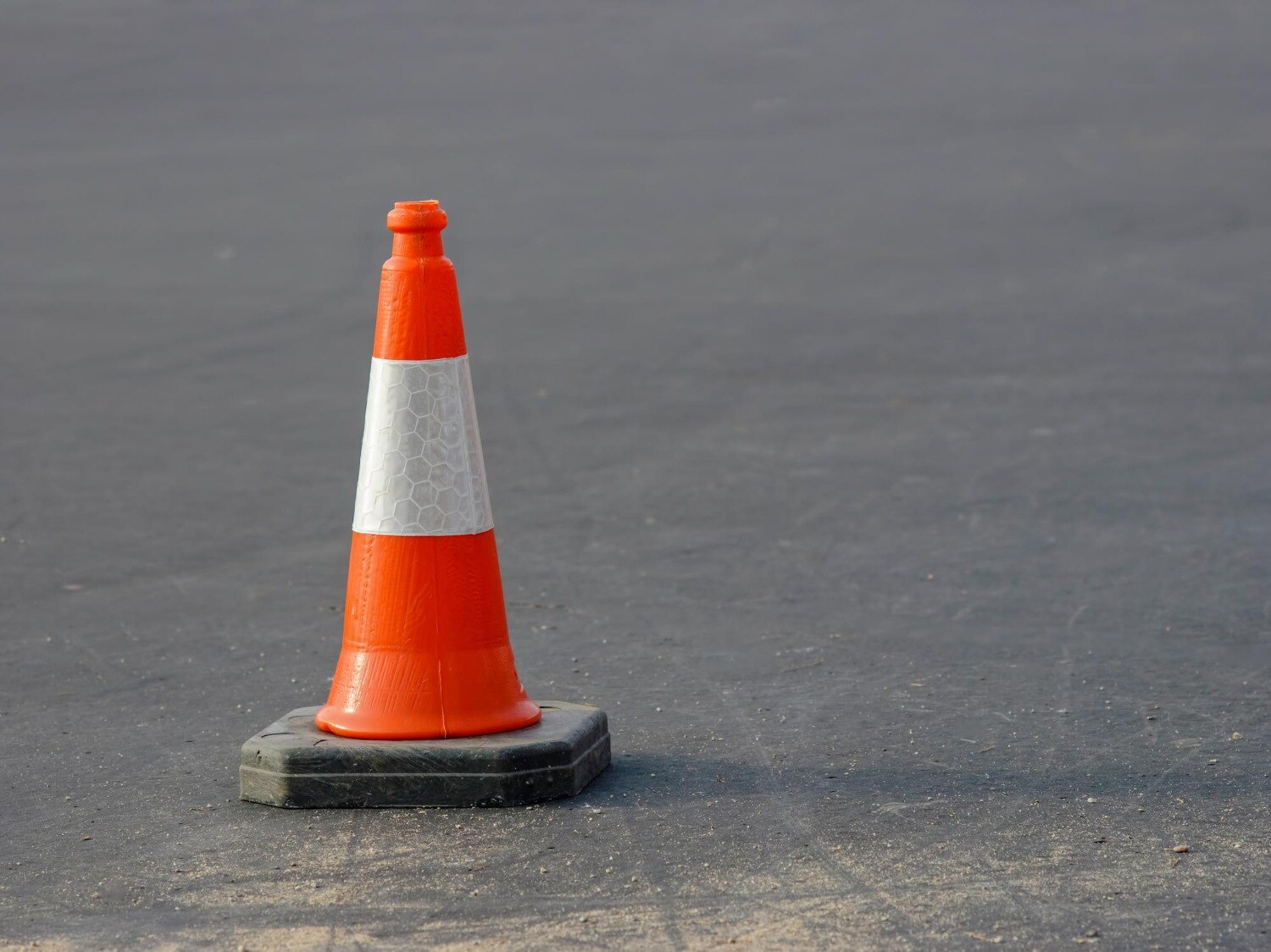
Heavy base traffic cones for factories suit temporary channelizing at factory gates, loading bays, internal roads, construction areas, truck routes, temporary closures and vehicle diversions when wind or vehicle turbulence could move a lighter unit. They are not barriers.
Stability comes from cone height, centre of gravity, base footprint, contact friction, wind exposure, truck-generated air blast and impact direction—not weight alone. A heavy base reduces wind overturning, but it can still slide on dusty, wet or oily concrete and cannot stop a truck, bus, forklift or speeding car.
| Feature | Stability contribution | Limitation |
|---|---|---|
| Base weight | Resists wind overturning | Does not prevent sliding or vehicle impact |
| Wide footprint | Increases resistance to tipping | Still fails on poor-contact surfaces |
| Rubber grip | Improves contact friction | Oil, dust and water reduce grip |
| Flexible construction | Survives some tyre strikes | Does not maintain a fixed boundary |
| Retained ballast | Keeps mass attached to the cone | Adds no crash protection |
- Internal-factory controls: site EHS rules for dimensions, placement and separation from forklifts, trucks and pedestrians.
- Public-road work zones: Indian road-work guidance and local authority requirements for dimensions, retroreflectivity, night operation and separation from live traffic.
- Actual conditions: observe the line during truck movements, close passes and diversions; use a barricade, water-filled barrier, guardrail or engineered protection where workers need physical separation.
Why cones move, lean or fail on Pune surfaces
A cone can remain upright and still fail: truck and bus air blast, wind overturning, or a tyre strike can move it out of the intended line. These traffic cone stability problems are not solved by weight alone; a heavy base still slides on a dusty shoulder or oily loading area.
Uneven asphalt and paver blocks make bases rock, while gravel reduces contact and ramps shift cones downhill. Water pooling reduces grip, and monsoon runoff carries silt beneath the base. After drainage, a cone can remain tilted. Never place a base over standing water, loose silt or an open drain.
Heat and UV exposure fade low-grade plastic, embrittle the body and crack the base connection or reflective bands. Diesel, oil mist, dust, forklift traffic and repeated stacking add abrasion and contamination.
This matters when selecting industrial traffic cones in Pune, where a separated base, warped footprint or permanently distorted body changes the centre of gravity and contact area.
Reject a cone when inspection finds:
- A split, softened, cracked or warped base, rocking under hand pressure, or sharp edges.
- A body crack, permanent distortion, severe lean or deformation after being run over.
- A stacked cone whose base has separated, or a body that no longer aligns with its base.
- A missing, peeling or uncleanable reflective band, or bands covered in oil and grime.
- Faded colour that no longer gives clear daytime recognition.
- Contamination that cleaning cannot remove, especially diesel, oil or embedded silt.
How to test a cone line before vehicles rely on it
Accept a cone line only after it survives inspection on the pavement and observation during real vehicle movements.
1. Inspect the route. Remove loose dust, silt and oil where possible, and never place a base over standing water, an open drain or loose material. Test a heavy base traffic cone in Pune on the actual asphalt, concrete or paver surface—not a smooth indoor floor.
2. Lay out the taper and line using approach speed, sight distance and road geometry. Choose spacing for the specific use: speed control, lane narrowing, pedestrian segregation, reversing zones, junction mouths, blind bends, truck turning paths or temporary work areas. Do not apply a universal one-metre rule.
3. Run trucks, buses, forklifts and tankers through the route, including close passes. Truck air blast can displace cones even when ambient wind is low. Watch for overturning, sliding out of the taper, rocking, leaning or separation from the base.
4. Reinspect after heavy rain, drain overflow, road washing and vehicle impact. A cone that remains upright but slides is still a traffic-control failure.
5. Confirm advance signs, reflective bands, night lighting, trained marshals or flaggers, emergency access and physical separation from reversing vehicles. Cones channelise traffic; they do not arrest vehicles.
Choose light-base cones for rapid indoor repositioning, flexible cones for repeated strikes, and message plates for instructions. Use barricades or water-filled barriers for stronger separation, paint for permanent parking control, and speed breakers for speed reduction.
What to specify, count and inspect before a factory purchase
Ask for a V140 data sheet, not a “heavy-duty” label. Record overall height, base length and width, base weight, cone material, colour, wall thickness, reflector or reflective-band configuration, polymer specification, UV-weathering evidence, operating heat range and cleaning instructions. Require batch consistency, replacement availability and the applicable reflectivity evidence.
- Count cones from the layout: a gate needs approach guidance and pedestrian-gate separation; a driveway needs both edges and a taper; a loading dock needs reversing-zone guidance; a repair area needs a complete perimeter and access gap; a diversion needs advance warning and a continuous channel.
- Add controlled spare stock from observed site damage, not an invented percentage.
- Test nesting in the actual rack, trolley, vehicle or gate store. Wide, non-nesting bases consume space, while stacking can abrade bands and deform bodies.
- On delivery, check rocking, flatness on representative pavement, dimensions, colour, moulding defects, loose bases, body-to-base alignment, missing or peeling bands and abrasion after repeated stacking.
- Specify a lifting or deployment method when base mass makes dragging likely.
| Purchase measure | What to compare | Why it matters |
|---|---|---|
| Purchase price | Unit cost against replacement frequency | A cheaper cone can cost more over its service life |
| Handling labour | Mass, lifting method and deployment time | Heavy bases can invite dragging and inaccurate placement |
| Storage volume | Nesting depth and rack capacity | Poor nesting expands storage requirements |
| Reflectivity | Band configuration, cleanliness and evidence | Tape cannot compensate for a damaged or dirty body |
For a heavy base traffic cone in Pune, these checks make heavy base traffic cones for factories measurable rather than assumed.
When the specification should lead to another control
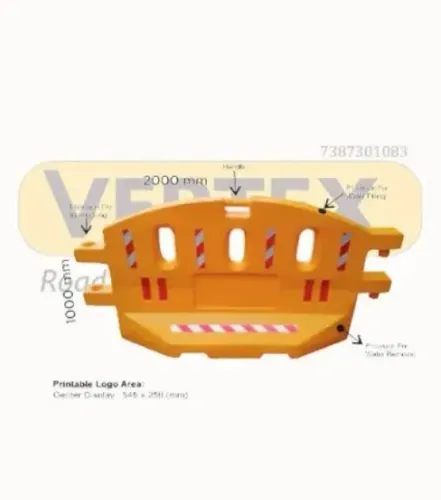
A heavy-base cone is the wrong sole control for high-speed exposure, required physical separation, or any place where a truck can displace it. Durable road cones for worksites channel vehicles; they do not arrest them.
1. Replace the cone with a designed gate, bollard, barricade, guardrail, water-filled barrier or other engineered protection when workers, pedestrians or equipment need separation. Select it for the vehicle type, impact direction and speed.
2. At a factory entrance, use cones only for advance guidance around access-control equipment. They do not stop deliberate entry, hold a lane against vehicle pressure or protect a pedestrian gate.
3. Match the alternative to the failure you are accepting. Flexible cones sacrifice some positional stability but survive repeated strikes better; light bases sacrifice wind resistance for faster indoor deployment. Neither solves a collision hazard.
4. Review the layout when a Pune site has a high-speed approach, continuous pedestrian route, reversing truck path, forklift crossing or narrow gate. The control may need a barrier and a separate marked route, not a heavier cone.
5. Ask Vertex Road Safety Products, as a Pune manufacturer and installer, to demonstrate the selected unit on the actual surface during truck and forklift movements. Check its fit with your cone store, trolley or rack, then test inspection, cleaning and replacement procedures before ordering.
For industrial traffic cones in Pune, make the supplier prove that the specification supports the control plan rather than treating “heavy-duty” as the plan itself.
Related products
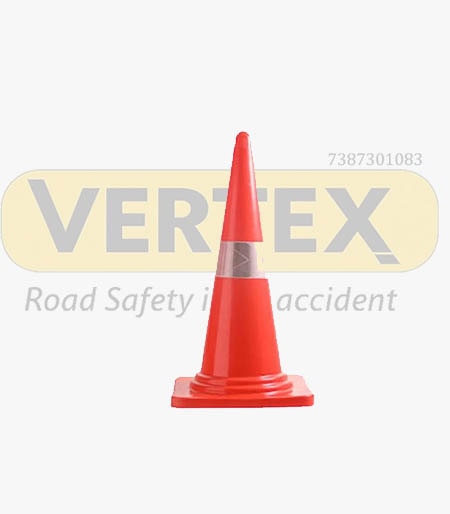 | Vertex Traffic Cone Heavy Base -PC V140 Vertex Traffic Cone Heavy Base -PC V140 A traffic cone is a plastic object with a pointed top that is placed on a road to prevent people from driving or parking there. View product → |
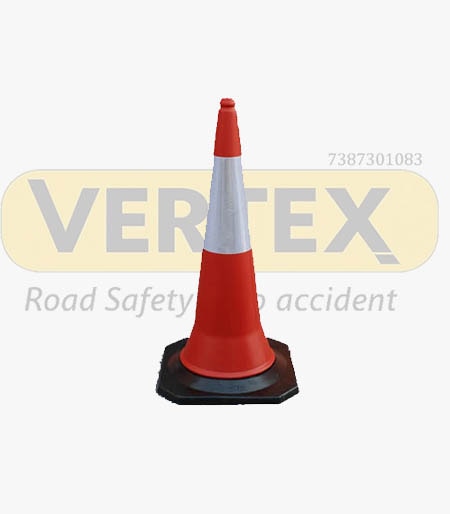 | Vertex Traffic Cone Light Base Vertex Traffic Cone Light Base Vertex Traffic Cone Light Base is designed for road safety and traffic management. View product → |
Frequently asked questions
When is a heavy base traffic cone the right choice for an industrial road?
Use one for temporary channelizing at factory gates, loading bays, internal roads, construction areas, truck routes, closures and diversions where wind or vehicle turbulence could move a lighter cone. A cone is not a barrier.
Why do industrial traffic cones move, lean or fail on Pune surfaces?
Uneven concrete, potholes, loose gravel, oil, dust, water and sloped surfaces reduce base contact. Truck turbulence, tyre strikes and poor spacing add movement and can make a cone line lean or open.
How do you test a cone line before vehicles rely on it?
Place the cones on the actual route, check base contact and alignment, then observe the line during representative truck and forklift movements. Replace unstable units and correct spacing before opening the route.
When should a traffic cone specification lead to another control?
Choose barriers, gates, bollards or vehicle-impact protection when you need to stop vehicles, protect pedestrians from an intrusion or maintain separation after a cone is struck.
Related products
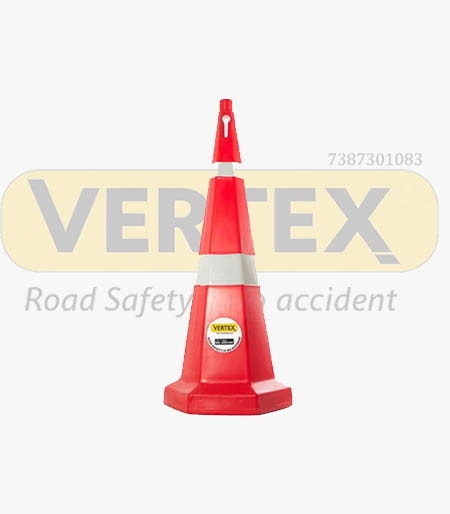 | Traffic Safety Hexa Cone Traffic Safety Hexa Cones are widely used for effective traffic control and management. View product → |
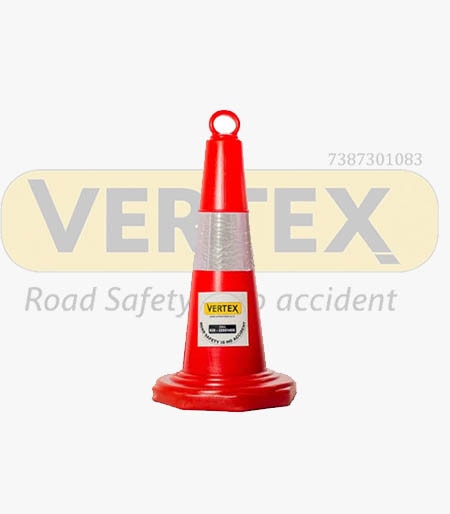 | Vertex PVC Traffic Cone PC V130 Vertex PVC Traffic Cone PC V130 Vertex PVC Traffic Cones are designed for road safety applications. View product → |
 | Cone Message Plate Cone Message Plates are designed for effective traffic management and control. View product → |
 | Vertex Flexible Traffic Cone Vertex Flexible Traffic Cones are designed for traffic control and road safety. View product → |
Keywords