Industrial roads face traffic conditions that ordinary parking facilities may never experience. Employee cars, delivery vans, forklifts, buses and heavy commercial vehicles can move through the same facility, sometimes throughout multiple shifts.
This makes the selection of Heavy Duty Plastic Speed Breakers for Industrial Areas a project-specific decision.
A product described as 'heavy duty' should not be selected from the label alone. Buyers need to understand its intended traffic application, dimensions, construction and installation requirements.
Begin With an Industrial Traffic Assessment
Before requesting a quotation, document the traffic using the proposed installation point.
Useful information includes:
- Vehicle categories
- Approximate traffic frequency
- Road width
- Existing vehicle speeds
- Pavement type and condition
- Indoor or outdoor location
- Nearby gates or intersections
- Pedestrian movement
- Loading and dispatch activity
This helps suppliers understand the actual operating environment.
Review the Product Specification
Industrial buyers should request sufficient product information to compare options meaningfully.
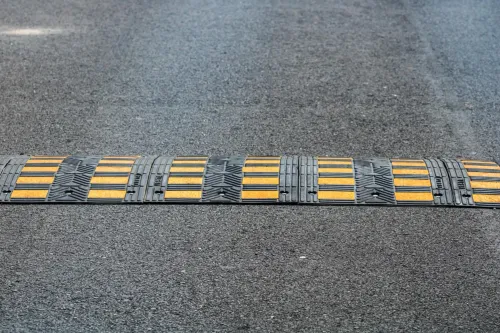
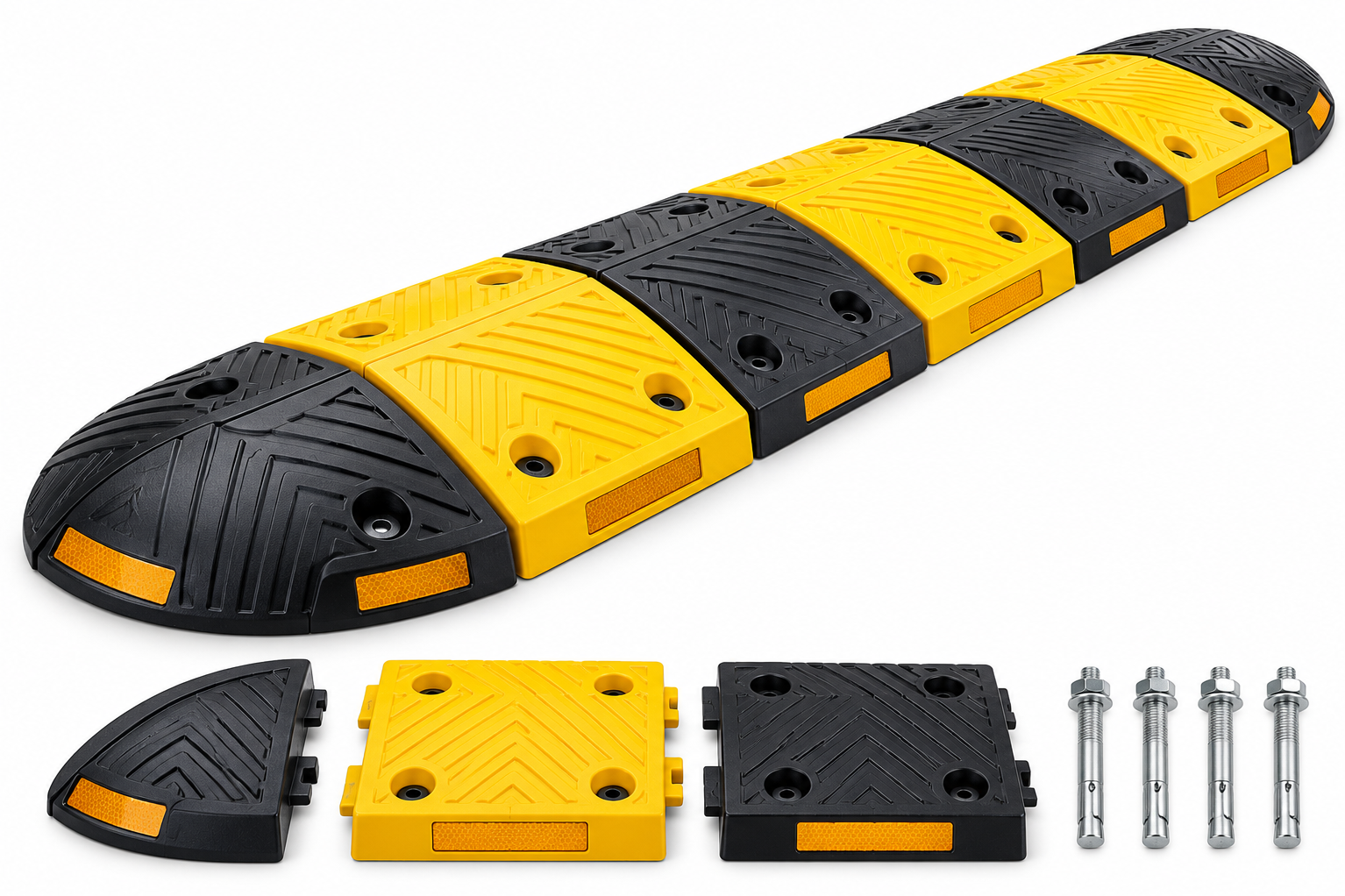
Look at module dimensions, material construction, profile, visibility features, end sections and recommended fixing method. Where a project has specific technical requirements, confirm compatibility before placing the order.
Do not assume that every plastic speed breaker has the same traffic capability simply because the external appearance is similar.
Positioning Requires Operational Awareness
Factories and logistics facilities often have complex movement patterns.
Installing a speed breaker too close to a loading area, turning point or another operational feature can affect traffic flow. The location should achieve the desired speed management without unnecessarily interfering with normal site operations.
Pedestrian routes should also be considered as part of the broader traffic plan.
Installation Is Part of Product Performance
Repeated tyre loading and braking forces place stress on modular sections and their fixings.
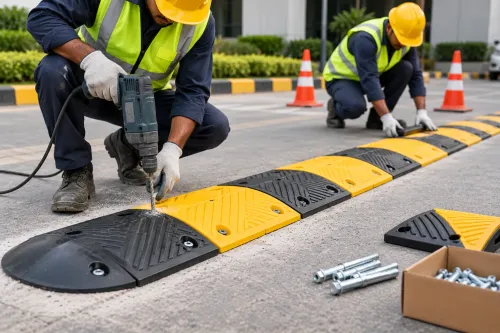
The pavement should therefore be suitable for anchoring, and the recommended installation method should be followed. Periodic inspection can identify loose fixings, damaged modules or reduced visibility before these become larger maintenance issues.
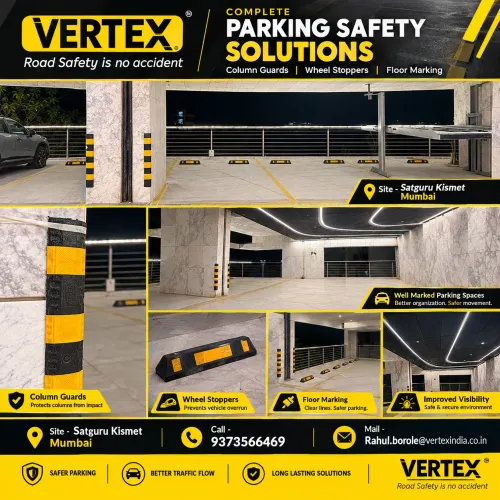
Vertex Road Safety Products works with road and traffic safety requirements in Pune and across Maharashtra, including speed-control products for commercial and industrial environments.
For procurement teams, EPC contractors, factory managers and warehouse operators, readiness begins with accurate site details. Sharing roadway measurements, photographs, pavement information, vehicle categories and required quantities allows the proposed solution to be assessed against real operating conditions.
For industrial applications, purchasing solely on the lowest per-module price can overlook installation, durability and suitability. A better procurement decision considers the complete installed system and the traffic it will encounter every working day.
Keywords